



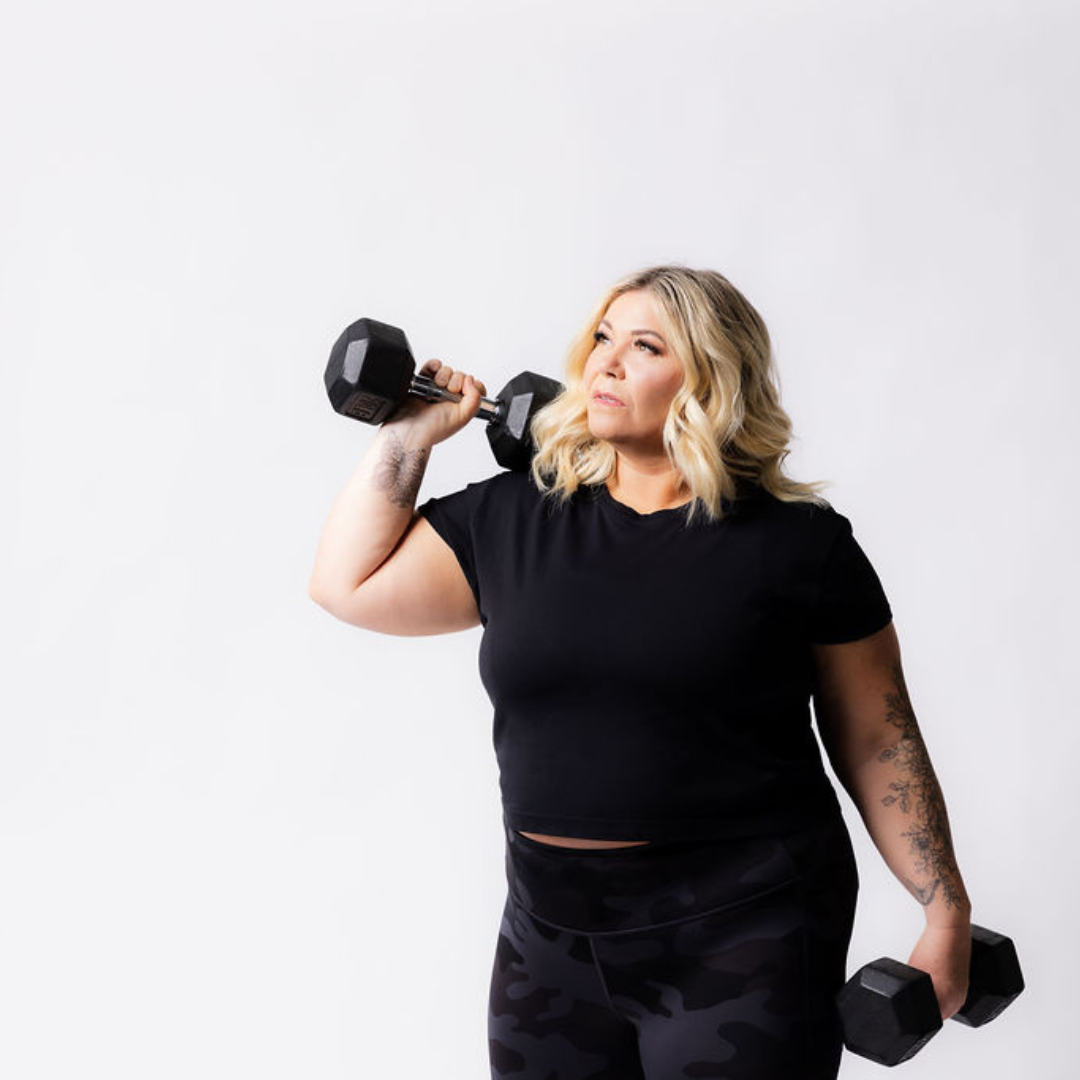
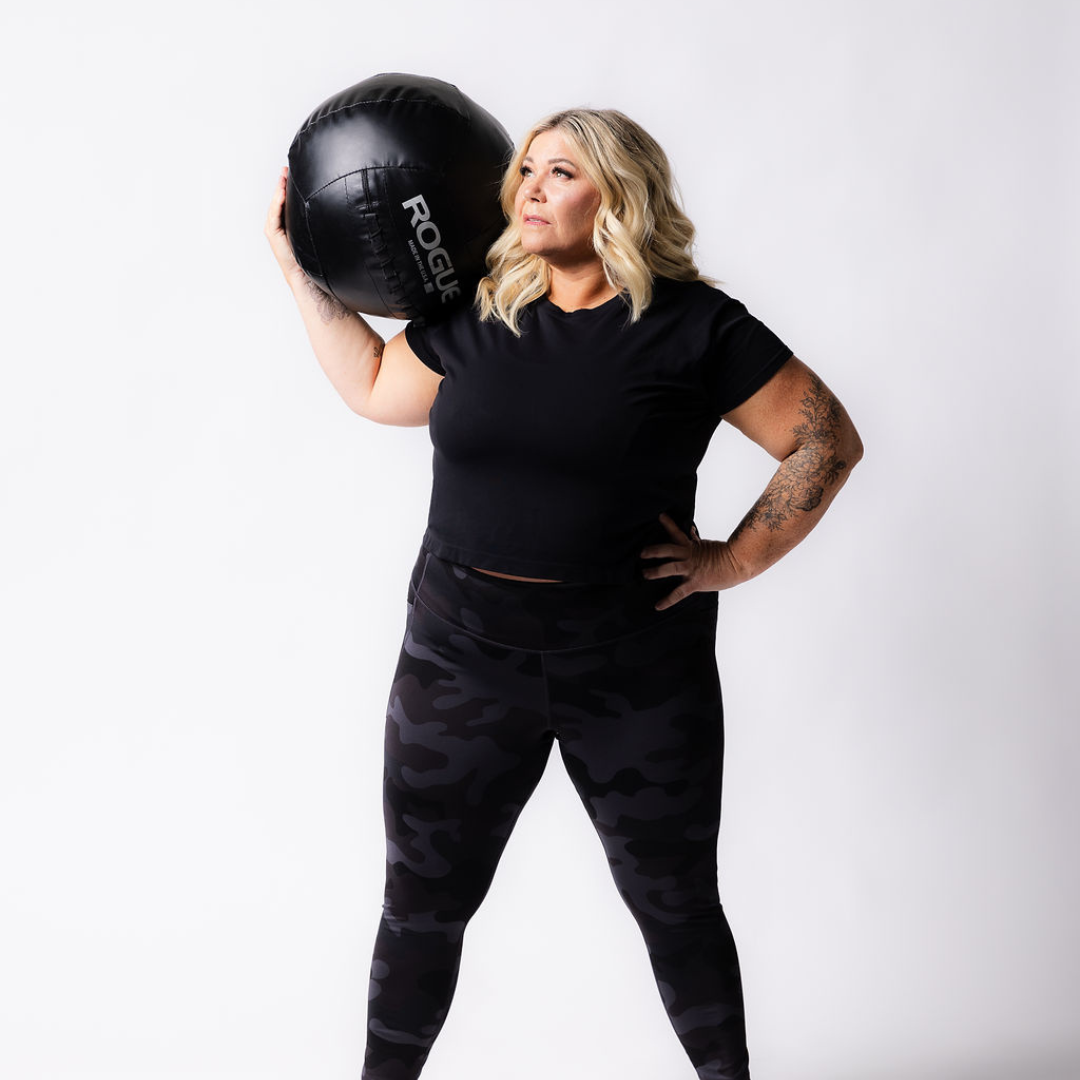
There’s a moment Louise Green comes back to often — not because it was loud or dramatic, but because of how quietly it shifted everything. She was standing in a running group, in a larger body, listening to a coach who never once mentioned weight. No talk of shrinking. No before-and-afters. Just movement.
“I didn’t know this was a thing,” she says. “I didn’t even know something like this existed because there was such a lack of visibility with social media not being a thing.”
For Louise, that moment didn’t just change how she moved her body — it changed what she believed was possible. From there, she made a decision that would go on to reshape the fitness industry for thousands of women around the world.
Today, she is the founder of Big Fit Girl — a global platform offering strength training, coaching and education centred on size-inclusive, weight-neutral wellness.
“It’s a really vibrant community, with strength training, coaching calls and guest speakers, all centred around weight-neutral wellness.”
Creating a new space
Back in 2007, long before body positivity was part of everyday conversation, Louise was a new fitness professional trying to find her place in an industry that didn’t reflect her.
“I had a larger body, and I really didn’t feel like I fit or could work in the industry, given how I looked. Instagram didn’t exist, and if you wanted to see a body that wasn’t ripped and sculpted in fitness media, it was very difficult to find. It didn’t exist.”
Like many women, she had spent years quietly believing that she was the problem.
“I was in diet culture for more than a decade, just feeling like I was this big failure, and then I saw a woman in a larger body leading a running group, not talking about weight — and it changed everything. I opened a fitness boot camp for women with larger bodies because I didn’t want people like me to be an afterthought anymore.”
It was simple in concept, but radical in practice. For many women, it was the first time they had seen themselves reflected in a fitness space, or felt like they truly belonged. What began as access, a space to move, sweat and feel good, quickly revealed itself as something much bigger.
“The media were very interested, but they covered it like a sideshow. It wasn’t taken seriously. It became this spectacle around body size.”
Then one story went viral. Her phone rang nonstop. The narrative spun out of control.
“The headline was ‘Gym bans skinny people’. My phone was ringing 24/7, and that’s when I realised this wasn’t just about representation, this was a cultural dismantling.”
Instead of pulling back, she leaned in, clear on what was at stake.
“I was like, I am not backing down from this message. People need this. There is an inequality in health and fitness spaces, and the way this was being turned into a circus was only continuing that inequity.”
It wasn’t just noise — it was proof of something deeper.
“That was the turning point. I realised this was hitting a nerve with a global audience, and as the internet grew, we were starting to find each other, people doing this work in their own corners of the world, and building something bigger.”
The power of belonging
Over time, what Louise created has evolved from in-person boot camps to a global movement, including her book Big Fit Girl, coaching programs and a worldwide community. But at its core, the impact has stayed the same, and is something she hears again and again.
“This was the first time I’ve ever felt I belong. When people feel safe and seen, and movement is no longer tied to shame or punishment, they come back. They stay. They build consistency. They have the same access to health and wellness that thinner people have.”
For Louise, the work isn’t just physical.
“It doesn’t matter where someone is in the world, there’s a common thread … you’re supposed to look a certain way, and you don’t. The fitness industry has co-opted this idea that this is the place where you come to conform, to ‘fix that’ and ‘become acceptable’, and we’ve decided we’re not about that.”
Louise’s work gently, but firmly, helps people rewrite their relationship with movement from the ground up.
“We do an exercise called rewriting the fitness story because the fitness story is often not our own story. It’s the cultural story.
“People think it has to be all or nothing, done perfectly. But the real work is about doing less, building up slowly, and finding an environment where you actually feel comfortable and supported.”
From changing bodies to trusting them
Louise’s own journey mirrors what she now teaches.
“It shifted for me from what my body looks like to what my body can do, feeling strong, capable, powerful. And I still have days where I don’t like what I see. That’s part of being a woman in this world.”
These days, she leans into strength and athleticism, not for calorie burn, but for something far more meaningful. When hard days come, as they inevitably do, she returns to what matters most.
“Our value is not how we look. Our aesthetics are not our currency. It’s actually the least interesting thing about us.”
Through her programs, Louise centres what she calls weight-neutral wellness.
“We’ve been trained to approach movement from a place of conforming, but weight neutrality is about the long game, feeling better, getting stronger and supporting your body over time. It’s also about taking the pressure off loving your body, knowing some days will be good, some won’t, and moving away from constantly believing your body needs to change.”
Embracing change
Today, Louise isn’t just working with individuals. She’s educating the fitness industry itself.
Through her Size Inclusive Training Academy and partnerships with organisations like the American Council on Exercise, she’s helping shift how professionals think about bodies, movement and health.
“I work with the fitness industry now, educating professionals, and while they’ve been slow to come on board, they are starting to. There’s still some contradiction in what’s being taught, but I’m not backing down from this work. I know it’s moving the needle, even if it’s still on the fringe.”
As for what comes next, Louise is hopeful, but realistic.
“I’d love to think we’re moving away from aesthetics for the next generation, but it’s complicated. Young people are navigating a whole new level of messaging through social media, and they’re still being shaped by it,” she says.
“There is more agency and less tolerance, but there’s also a lot of noise. We can filter what we see, and even when it doesn’t seem like it, young people are listening and picking up what we model. If you can instill your beliefs and your experiences and your hopes, they will pick up some of it.”
And if there’s one thing Louise hopes people take from her work, it’s this:
“Everybody has the right to move their body, and you can do that in the body you have right now. Your body doesn’t have to change to experience joy, endorphins, movement and sweat. You can do it exactly as you are and reap all the benefits.”
Movement isn’t something you have to earn — it’s something you deserve. And maybe most importantly:
“If you look up the word athlete, it doesn’t mention a size or a look. That means there is an athlete inside every single body.”
You can connect with Louise on Instagram.